Home »

Two Bite Interview: Darrin Bell, one of America's most pro gay cartoonists

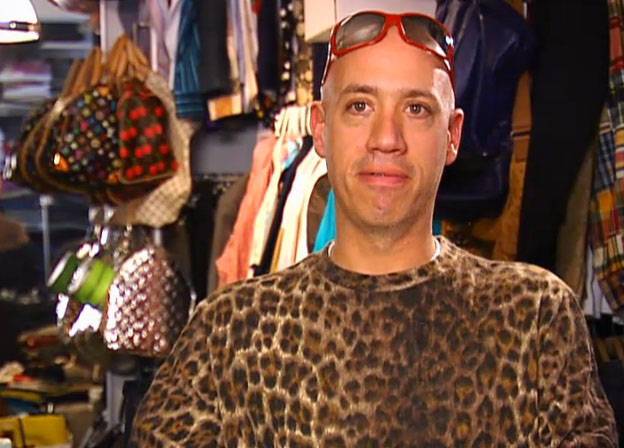
Two weeks ago I wrote about the daily cartoon strip Candorville in my BEST.GAY.WEEK.EVER column. In case you missed that dazzling column, the strip is drawn by Darrin Bell and tells the story of struggling writer Lemont Brown, and his circle of friends. The strip is hip, urban, and unabashedly liberal as evidenced by the entire week of strips devoted to how the right demonizes us 'mos. We were so impressed with Mr. Bell's work that we asked him to do a Two Bite interview with us. He, of course, graciously agreed and we think you'll be as impressed with his smarts, compassion, and wit as we are.

AfterElton: Candorville is unabashedly pro-gay. What accounts for your sensibility on the issue? Gay friends or family? Or are just an all around cool guy?
Darrin Bell: My mom's White (and Jewish), and my dad's Black (and Christian). So I've been in the minority everywhere, even in my own family, since day one. I know what it feels like to be seen as something weird. I know what it feels like to be considered an abomination just because of what I am. So there's no way in hell I'm going to stand by in silence and watch anyone be treated that way. I do have several gay friends (and I'm sure I must have family who are gay), but knowing someone shouldn't be a prerequisite for empathizing with that person. I felt the way I do now long before I ever met a gay person. As silly as it sounds, I've felt this way ever since I was four and saw the first episode of Three's Company. This country's filled with people like "Mr. Roeper," and that's got to change.

AE: Have you ever thought about adding a gay character to the strip? How about a cute little gay animal that you could market?
DB: I have thought about adding a gay character. In fact, I'm planning it, and people may be surprised by who it is.

AE:What sort of reaction do you get when your run your "gay" strips? Is it different from the usual reactions you draw?
DB: Mr. Roeper usually writes to me and asks if I'm gay, as if that would explain my point of view. I hear a lot of hate. I hear a lot of Bible-based rationalizations from people who seem to have glazed over the "judge not" part. Most of the newspaper editors I work with realize the value of pro-civil-rights commentary, but some don't. One paper refused to run the recent Candorville series that dealt with the relationship between Black preachers and gay people. I guess they thought a series advocating protection against hate crimes would stir up too much hate.

AE: What's more important to you--being funny or making social/political commentary?
DB: I think the commentary is more important to me. We all want to be useful. There are plenty of people being funny, but not too many of them are commenting on society/politics in a useful way. I have a degree in political science and a good B.S. detector and if I'm not using both, what's the point? Being funny is important, but I don't want to make people laugh without also making them think. That would be a waste of my time and theirs.

AE: Clyde aka C-Dog is an "undiscovered" rapper. Since rappers aren't know for their gay tolerance I wonder who C-Dog would be more likely to hang with--Tim Hardaway or John Amaechi?
DB: Clyde is the id of the strip, so his response might someday surprise me. But for now, his reaction to gay people is instinctive. Some people are instinctively at ease with something they're unfamiliar with, but most people are instinctively repulsed by it. Clyde is the latter. He's instinctively repulsed by anything unfamiliar to him: Gay people, classical music, knowledge...

What's more, he's acutely aware that his community (thugs, rappers, streetwise gangstas) look down on homosexuality, and since his street cred is everything to him, even if he were to come around he'd be conflicted about admitting it. It's not just gay people who deal with coming out of a closet -- there's also an "I have no problem with homosexuality" closet that people like Clyde seem to be stuck in.

AE: Was Reverend Wilfred on the recently deceased Jerry Falwell's speed dial?
DB: The Good Reverend has a painting of Falwell hanging over his bed. But nobody's quite sure if that's only up there 'til the $1 million check from the White House Office of Faith Based Initiatives clears.

AE: What's your take of the "Doonsebury-ification" (making them more political) of the comics?
DB: I think it's a symptom of the dwindling news coverage you see in the rest of the paper, and in the rest of the media. When television news stopped being serious and television reporters stopped asking tough questions, The Daily Show and The Colbert Report moved in to fill that void. When newspapers started slashing their newsroom budgets and news became more sparse, strips like The Boondocks and Candorville and Rudy Park sort of moved in to fill a void. The Daily Show generation wants to hear the tough questions and observations the rest of the media's too afraid to ask. And if they have to hear this stuff in the form of a joke because that's the only way to slip it in, that's how they're going to hear it.


Related Posts Plugin for WordPress, Blogger...

You are here

AE on Facebook


Active Forum Topics