News, Reviews & Commentary on Gay and Bisexual Men in Entertainment and the Media

Interview With James St. James

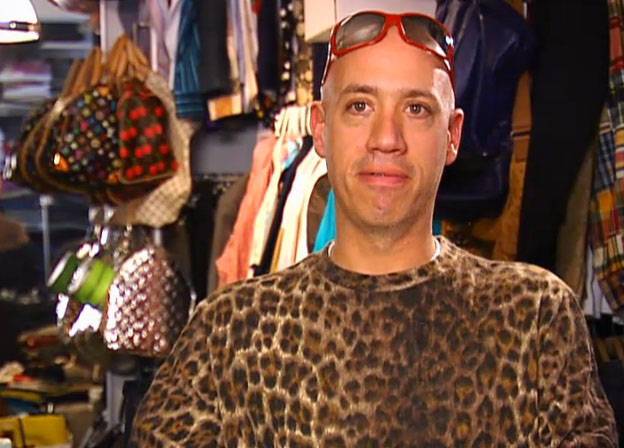
James St. James was a central figure in the New York City club scene of the '80s and early '90s who was known, along with his circle of fellow club kids, for his outrageous attire and hard-partying lifestyle. The good times came crashing down when St. James' friend, party promoter Michael Alig, was convicted of the murder of drug dealer Angel Melendez. St. James wrote of those events in Disco Bloodbath, which was nominated for an Edgar Award for best true crime book of the year and was the source of the movie Party Monster, starring Macaulay Culkin as Alig and Seth Green as St. James.

St. James' new novel, Freak Show, will be published by the young adult division of Dutton on May 17. Based on St. James' own teen years, this hilarious and heartbreaking novel focuses on Billy Bloom, who shows up on the first day at his new high school in South Florida decked out like a gay pirate. His flamboyant behavior leads him to be cruelly abused by his conservative, close-minded peers, but also inspires the unlikely friendship of Flip Kelly, the school's beloved football hero.

Waging a brave-hearted campaign for homecoming queen, Billy succeeds in uniting teen freaks of all kinds and finding the courage to be true to his fabulous self. We recently chatted with St. James, who now resides in Los Angeles, about issues affecting gay teens today, new media and gay culture, today's style icons (and lack thereof) and, yes, even gay werewolves.

AfterElton.com: I loved, loved Freak Show. And the first thing I'm dying to ask you is what parts of the book are closest to your own life experiences? How much of Billy Bloom is really you?
James St. James:
Billy is all me! It started out, actually, as an autobiographical piece. As it went along further, I changed it into third person, into Billy Bloom. The whole setup is me — that was my first day of school, when I had just seen Auntie Mame and I thought I was Rosalind Russell, and I went to a new school and I burst through the door going, "Darling!" And everybody just looked at me with their mouths hanging open.

I realized in those first 30 second of class I'd effectively doomed my entire high school career. And that was the jumping off point for the book. I did grow up in Fort Lauderdale, and all of it — the house, wacky maid, the distant father — all of that was pretty true. I was the weird little drag queen at school.

A lot of it came from my imagination, too. Billy is the person that I wish that I was. He's a lot stronger than I ever was. And he's probably going to be a greater artist than I ever am. I never ran for homecoming queen or anything like that. I just wish that I'd been a little stronger in high school.

AE: You do such a good job in this book at taking what are clearly painful experiences and finding humor in them.
JSJ: One of the things that I wanted to say is that to be a freak, to be a drag queen, to be an artist — any time you're going to go against the status quo, any time you're going to go against society — you're going to get s--- for it. For all these little kids, there's a glory in being a fabulous freak, and there's a glory in being a drag queen, and there's a lot of fun things that are going to happen to you in your life if you take that other road, that other path.

But be prepared: You're going to get s--- for it. You have to pay a price for it, but the price is worth it. I wanted to show that obviously Billy goes through a lot of hardship, but ultimately he's going to be a better person than the rest of the people he's in school with. You know, I get a lot of emails from a lot of kids, and they go through such hard times, these little gay boys and girls. I always say, "Just hang on … it gets better!"


User login

Recent comments

Put AfterElton.com headlines on your site/blog:

After Elton home page on logo online